
Introduction to 4-H

Emblem
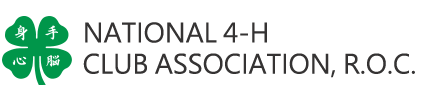
The 4-H emblem is a four-leaf clover in green, with the white characters for "Health" (身), "Heart" (心), "Hands" (手) and "Head" (腦) on its leaves. Green stands for life and eternity; white stands for purity and peace.
The clover is made of four heart-shaped leaves, symbolizing luck, love, health and vitality.
Educational Philosophy
"Learning by doing, and doing by learning"
Learning by Doing
In a spirit of democracy and self-governance, 4-H helps young people draw knowledge from nature and everyday experience, develop their potential, and build a positive outlook on life in their own environment.
Motto
To make the best better.
4-H Members
Young people aged 9 to 24 may, with their parents' consent, apply for 4-H membership through their school or their local Farmers' or Fishermen's Association. Once approved, they receive a membership card. Members are grouped by age into four levels: junior, beginner, intermediate and senior.
4-H Volunteer Leaders
Any adult aged 25 or over who shares 4-H's educational values and wants to support young people in rural, fishing and urban communities can be appointed as a 4-H volunteer leader, helping to organize 4-H clubs, set up project groups, carry out projects, run activities and guide members.
Activities
Taking part in meetings and activities is a vital part of 4-H education. Through activities, members come to understand the connections between people, between people and nature, and between people and the world they live in, and learn how to get along with others and to practice democracy and the rule of law.
4-H activities include:
- Project meetings
- Study visits
- 4-H annual meetings
- Method demonstrations
- Camping
- Project competitions and exhibitions
- Judging contests
- Recreation
- Volunteer training (volunteer leader camps)
- Education and training
- Youth leadership camps
- High school camps
- Joint training for college 4-H club officers
- Community service