

Extension Workers Tour Luoshan Elevated Canal in Hualien
From September 30 to October 2, 2026, 4-H Taiwan held a workshop on irrigation culture and paddy ecology for extension workers at a hot spring hotel in Yuli Township, Hualien County. Over three days and two nights, extension colleagues from across Taiwan first learned about 4-H and irrigation culture in the classroom, as well as the 4-H project clubs and the irrigation station in Fuli, then went to Sixty Stone Mountain and Luoshan in Fuli Township and followed an elevated canal all the way to the source of a waterfall.
Day 1: Learning About the People Behind the Canals
The workshop is part of the Irrigation Agency's Ministry of Agriculture program on irrigation culture and paddy ecology education. It was open to 4-H supervisors, instructors, volunteer leaders and senior 4-H members from farmers' and fishermen's associations at all levels, and to anyone involved in or interested in promoting irrigation culture. The morning of Day 1 opened with an “Irrigation Meet-and-Greet,” and the opening ceremony was chaired by the association's Secretary-General.
- 4-H and irrigation culture: an association staff member began with how the program started and demonstrated how to lead activities for children and teenagers.
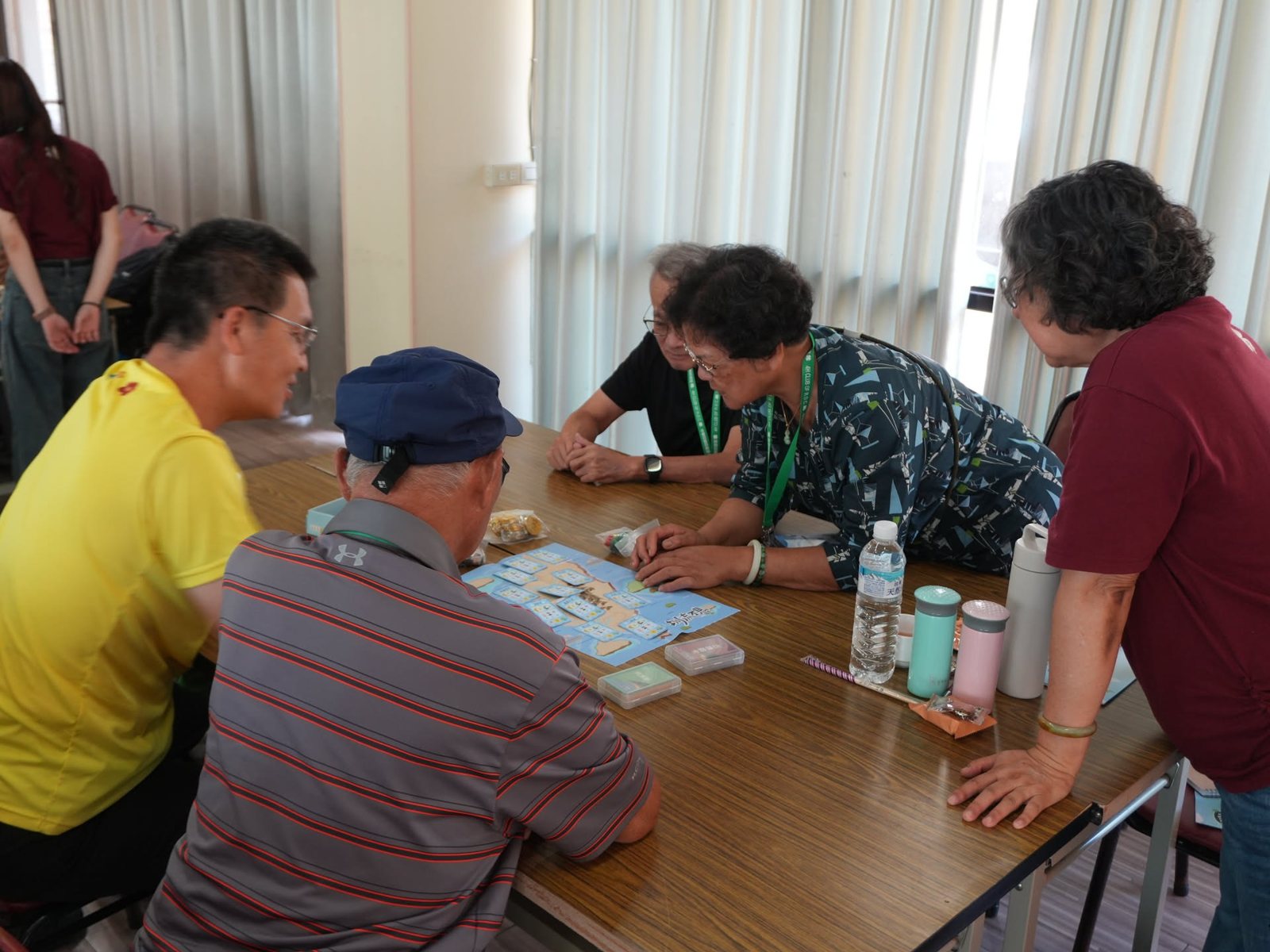
- Promoting the “Ever-Flowing Canals” teaching materials: participants played the board game, collecting resources such as labor and funding to build Taiwan's well-known historic canals.
- Project club sharing: a volunteer leader from the Fuli Township Farmers' Association described the 4-H project clubs in Fuli, from rice and organic soybean cultivation to tea-table promotion that draws on the character of Sixty Stone Mountain.
- Understanding irrigation work: a retired section chief of the Fuli Station of the Irrigation Agency's Hualien Management Office followed “the journey of a drop of water,” explaining where water comes from, how it is distributed to fields, and daily work such as irrigation service and disaster repairs. The station head also joined for a Q&A with participants.
Day 2: From Sixty Stone Mountain to Luoshan Waterfall
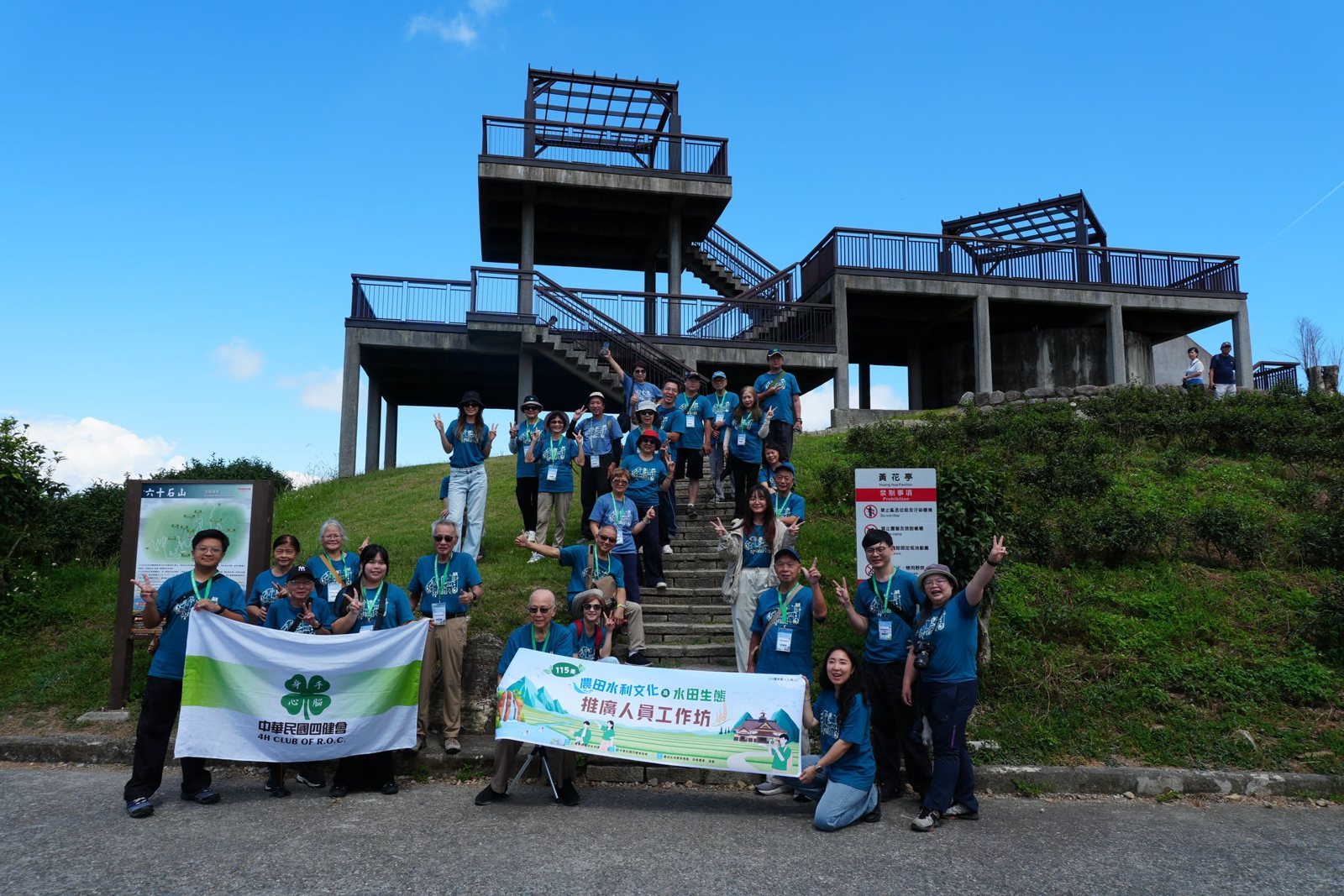
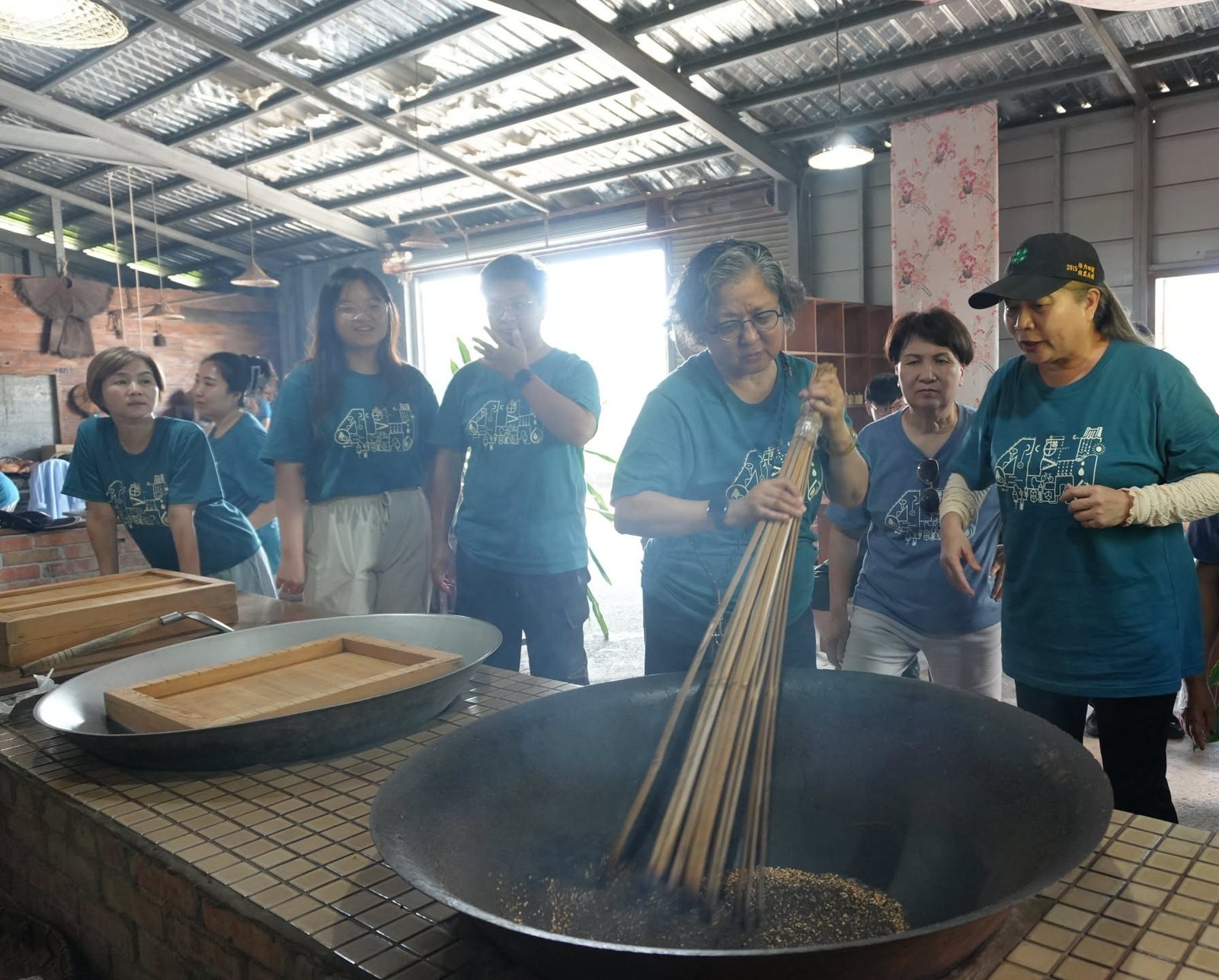
On the morning of Day 2 the group left Antong early and went up Sixty Stone Mountain to see the daylilies, hear the story of how the land was first cleared, and look out over the Huatung Valley from the Little Switzerland viewing platform. At midday, in a traditional kitchen in Luoshan, they stir-fried organic brown rice and salt together in a large iron wok, then sifted it, mixed it with syrup and pressed it into molds to make rice crispy cakes.
In the afternoon the secretary-general of the Luoshan Leisure Agriculture Area Development Association guided the group along the Luoshan trail. The Luoshan elevated canal takes water from Luoshan Waterfall, carries it over low ground on a raised channel to the Luoshan large pond (known locally as “Dapitang”) for storage, and then irrigates the surrounding fields. This facility, left over from the Japanese colonial period, is still in use, and farmers still walk the waterway to check it and clear fallen rocks and dead branches. Along the way the group also saw a mud volcano, heard how locals promote the Satoyama Initiative and invite residents to help tidy the bamboo groves, and finally walked to the foot of Luoshan Waterfall.
Day 3: Feedback and Sharing
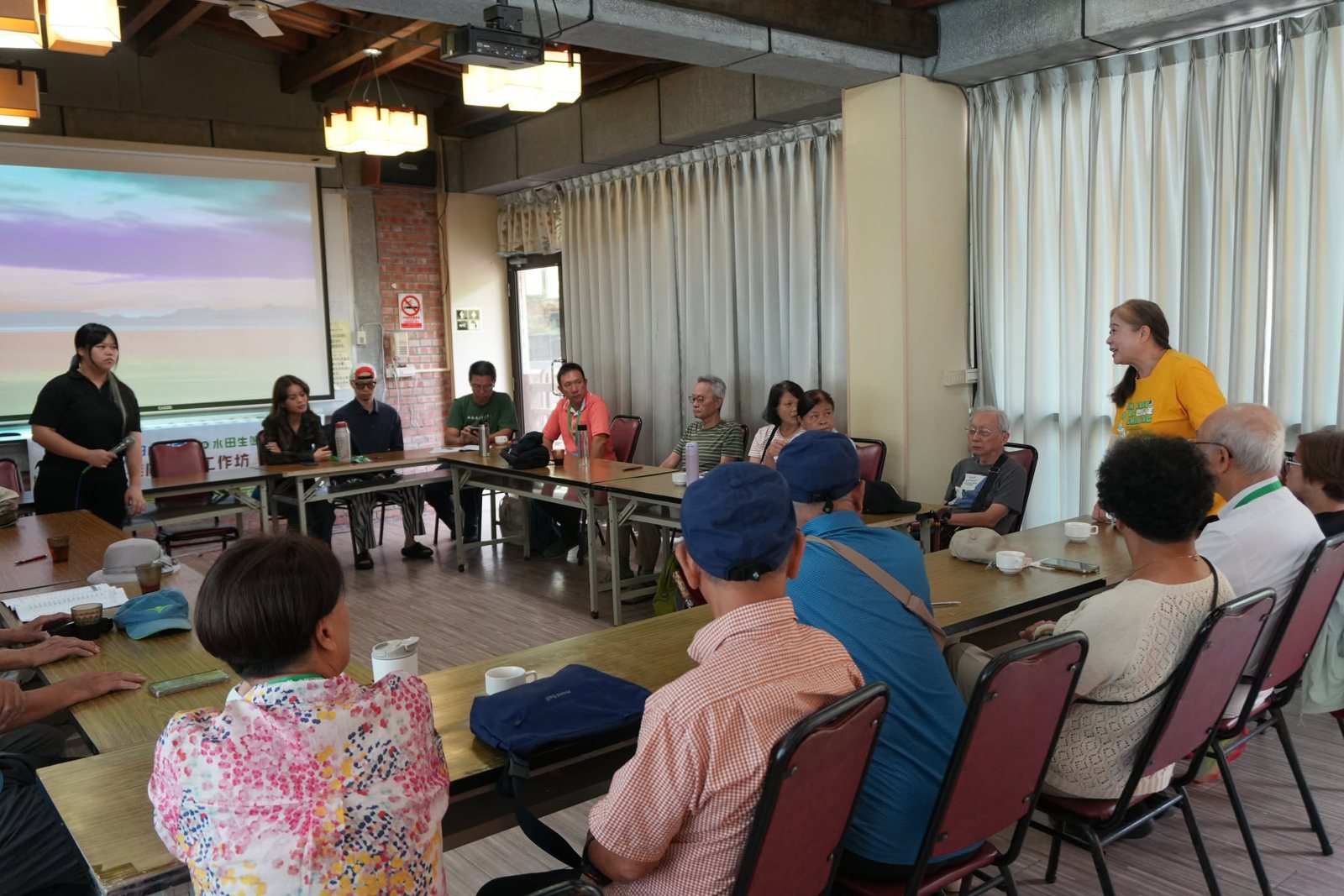
On the last day the group first watched a recap video of the three days, and then sat in a circle and took turns sharing. Some said they had mostly thought of irrigation as engineering structures, and that seeing the raised Luoshan canal carry waterfall water into the pond made them appreciate the effort earlier generations put into clearing land and maintaining waterways. Others said that seeing mountains, fields, canals and settlements linked in one landscape from the viewing platform gave them a concrete understanding of the “three lives” of paddy fields and the Satoyama Initiative.
Thanks to the Irrigation Agency of the Ministry of Agriculture for its guidance, and to the Agency's Hualien Management Office, its Fuli Station, the Fuli Township Farmers' Association and the Luoshan Leisure Agriculture Area Development Association for their help.