:::

Seed Training Camp on Irrigation Culture Held in Yunlin
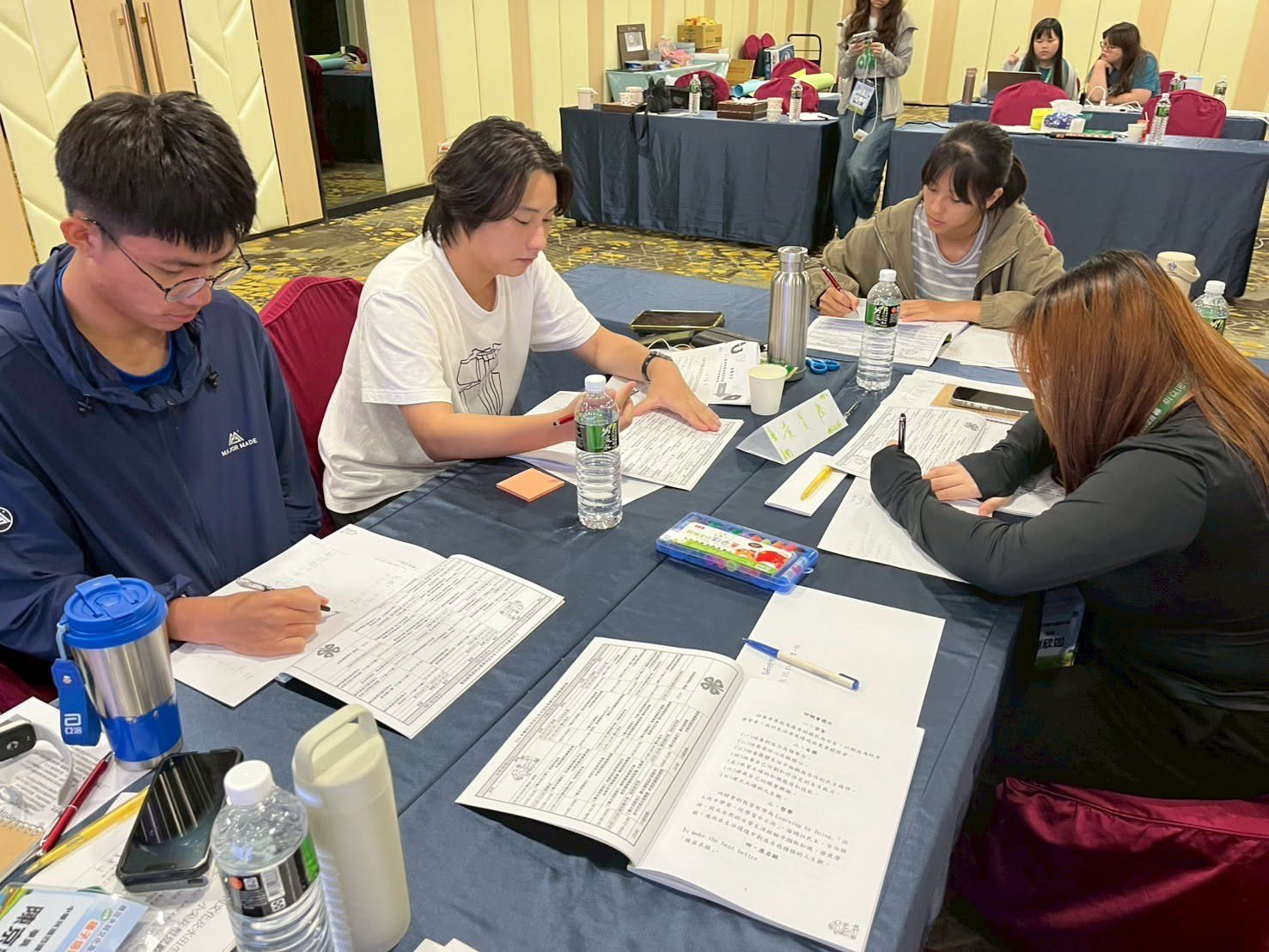
College-age participants sit around a long table, heads down, writing on lesson plan forms.

From June 30 to July 2, 2026, 4-H Taiwan held the Irrigation Culture and Paddy Ecology Education Seed Training Camp at a hotel in Douliu City, Yunlin County. 4-H youth from around Taiwan spent three days learning activity design and facilitation skills, visited the old tobacco barn in Linnei, canals, and the Irrigation Environmental Education Park, and on the last day presented the activity flows and lesson plans they designed in groups.

3
days
17
participants completed the camp

From Participants to Event Organizers

The seed training camp is part of the Ministry of Agriculture Irrigation Agency's Irrigation Culture and Paddy Ecology Education Program. It is for senior 4-H members and agricultural and vocational school and college students aged 18 to 24, aiming to develop young people into seed teachers of irrigation culture and paddy ecology who go back to help promote it locally. At the opening ceremony, a director from the Yunlin County Farmers' Association and the Secretary-General encouraged participants.
Day 1 | Building the Basics of Running Activities
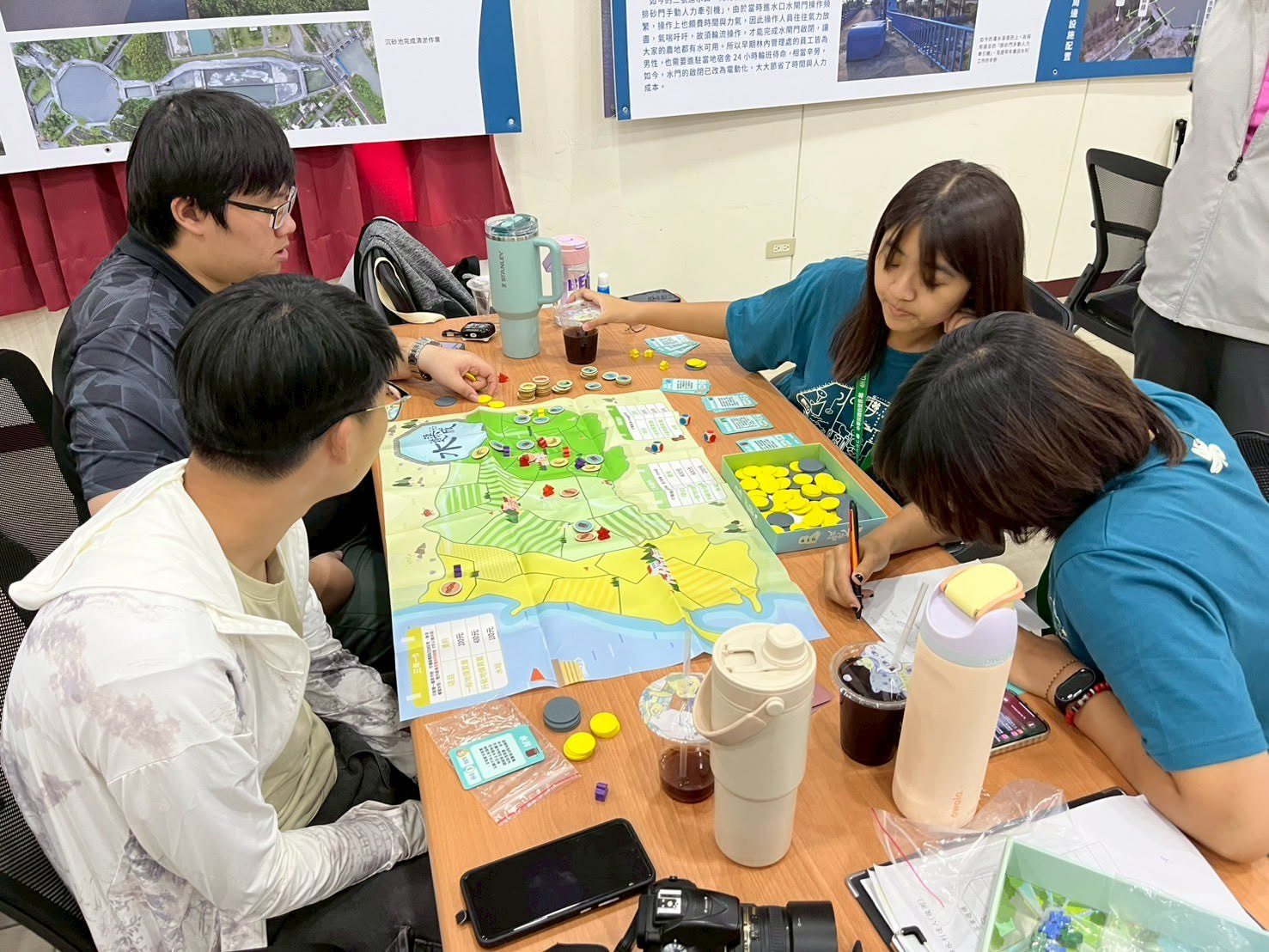
An association coordinator led “Getting to Know Each Other,” and another coordinator explained the relationship between 4-H and irrigation culture and led participants through hands-on use of the “Ever-Flowing Canals” board game. An instructor from Xiaying District Farmers' Association in Tainan City taught activity facilitation and handling the unexpected; a lecturer from the Old Tobacco Barn Lemon Coffee Farm shared experience of returning home to run a business; and a volunteer leader from Qingshui District Farmers' Association in Taichung City guided participants in building a full activity schedule.
Day 2 | Out of the Classroom, Then Back to Write Lesson Plans
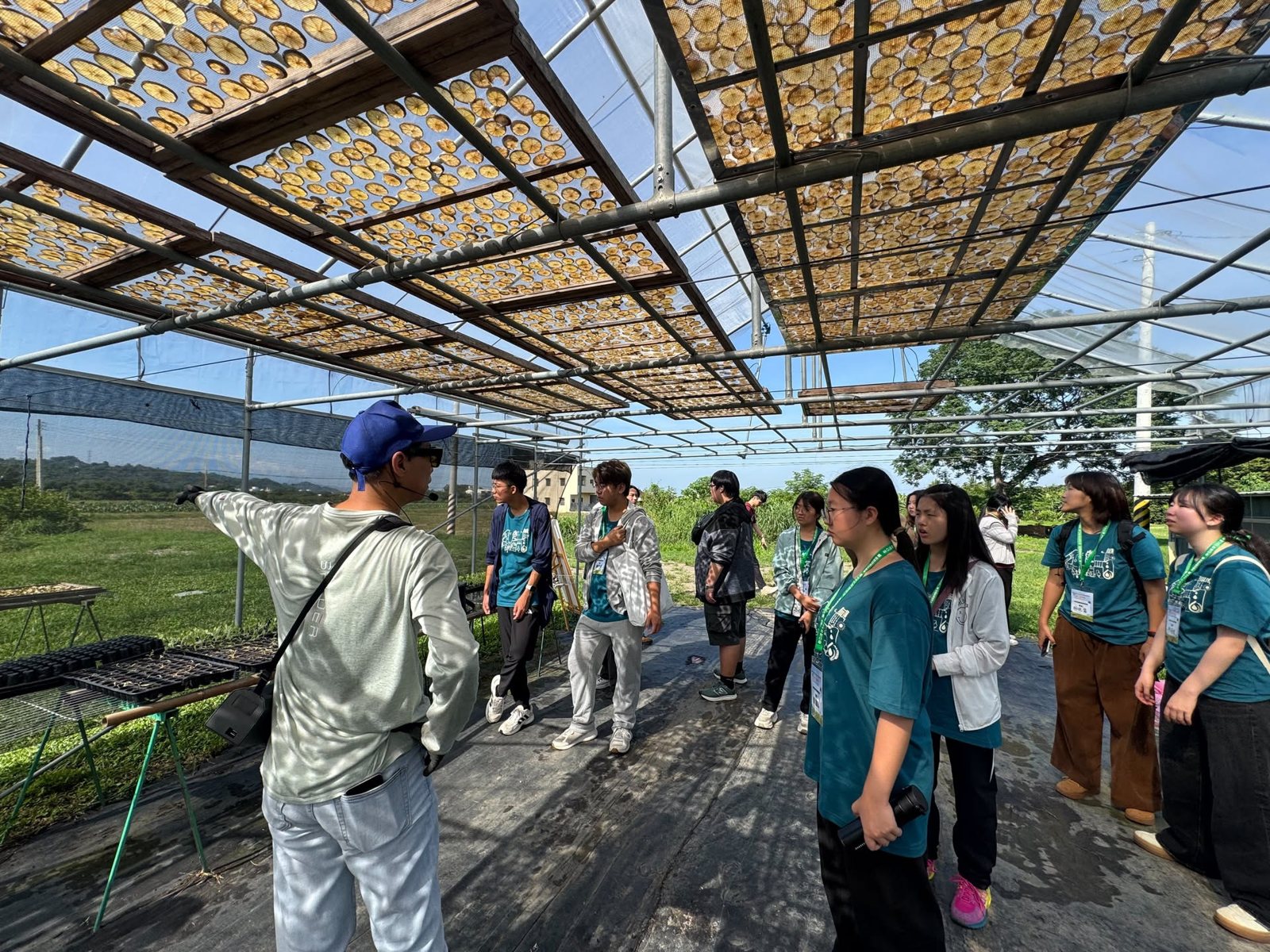
In the morning, participants visited the old tobacco barn and the canal side, where the lecturer explained how the old building was restored and how lemons and coffee are grown with natural farming methods alongside the canal next to the site. They then toured the Irrigation Environmental Education Park, trying a board game developed by the park and a LINE-based augmented tour. In the afternoon, at Jianmen Ecological Fruit Garden, an association director introduced farmland ecology and smartphone photography techniques, and a volunteer leader from National Pingtung University of Science and Technology taught lesson plan writing; participants finished a draft lesson plan before the session ended.
Day 3 | Presentations
Each group drew its activity flow on a poster. They first viewed one another's work and gave feedback in an open-space format at the “Irrigation Carnival,” revised their plans, and gave final presentations at noon explaining the purpose and method of the activity they designed.
Participants in camp shirts stand under a shed where dried fruit is laid out, listening as a guide in a hat points into the distance.
Listening to a guide beneath a drying shed

Walking Linnei's Canals and Ecology

The day-two visits put the irrigation topics from class back in the field: at the old tobacco barn, participants saw the relationship between canals and settlements; at the Irrigation Environmental Education Park, they learned about three-season rice cropping, irrigation facilities and how a work station operates; at the fruit garden they observed farmland ecology and practiced recording with a phone. In the evening each team put the local history and ecology material collected during the day into its lesson plan, ready for the next day's presentation.
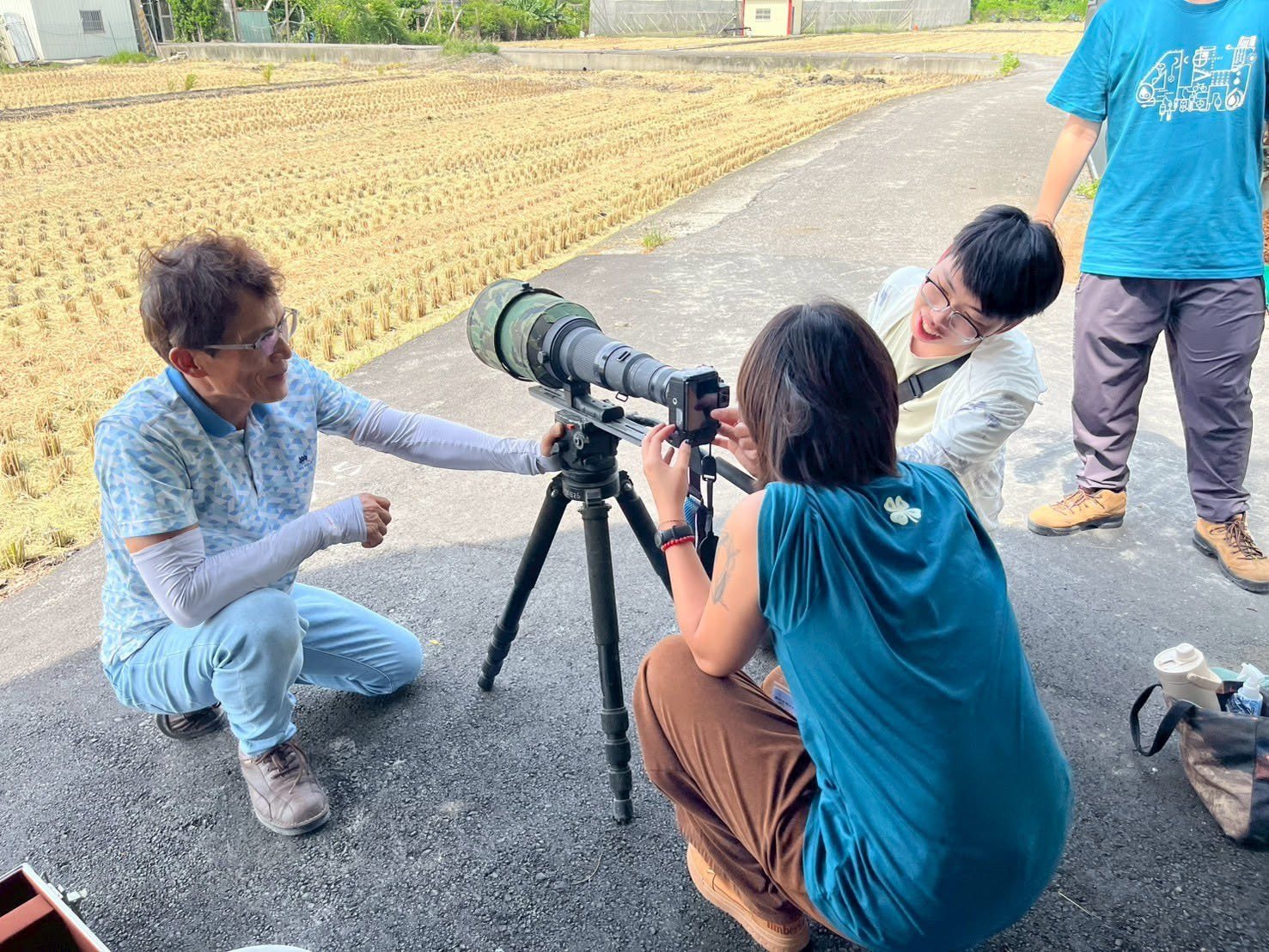
Participants crouch at the edge of a harvested rice field looking through a long lens on a tripod, with an instructor helping.
Observing with a telescope beside a harvested field
Four participants gather around a map board game on the table, placing tokens.
Trying a canal-themed board game in groups

Taking Lesson Plans Back to Local Communities

Over three days, participants went from arranging an activity schedule to writing lesson plans to presenting, completing an activity design they can actually use. After the camp, 7 of them took part in children's experience camps over the summer, using what they learned to introduce elementary school students to irrigation.
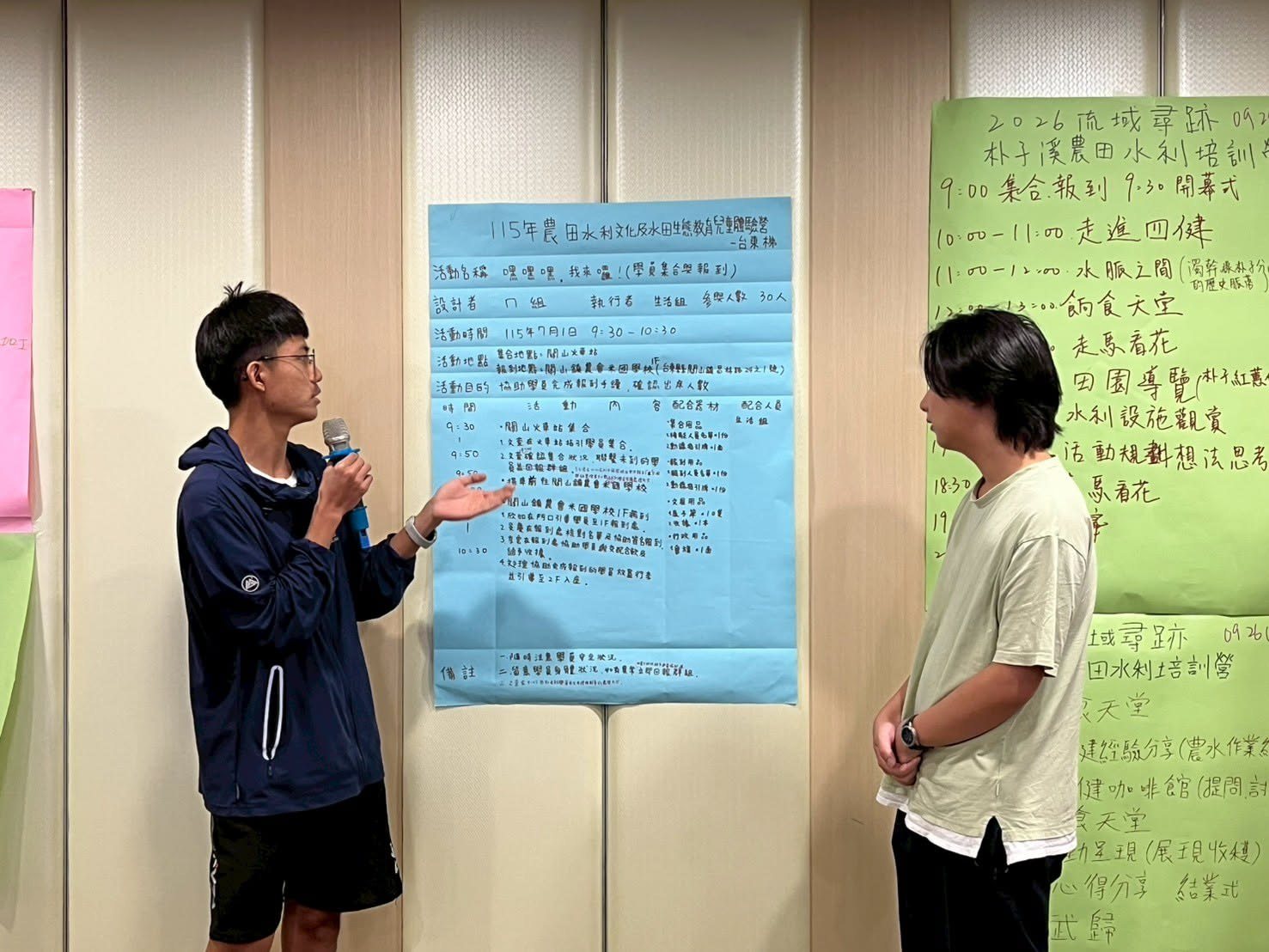
A participant holds a microphone and points at a handwritten poster on the wall explaining the plan while another listens.
Participants present their activity plans

Thanks to the Ministry of Agriculture's Irrigation Agency for its guidance, and to the Irrigation Agency's Yunlin Management Office, Yunlin County Farmers' Association, Linnei Township Farmers' Association and all the lecturers for their help.